Where Hardside Luggage Wins and Where It Costs You
Hardside and softside cases both survive normal trips. They fail differently — one terminal, one repairable — and that difference should decide the purchase.
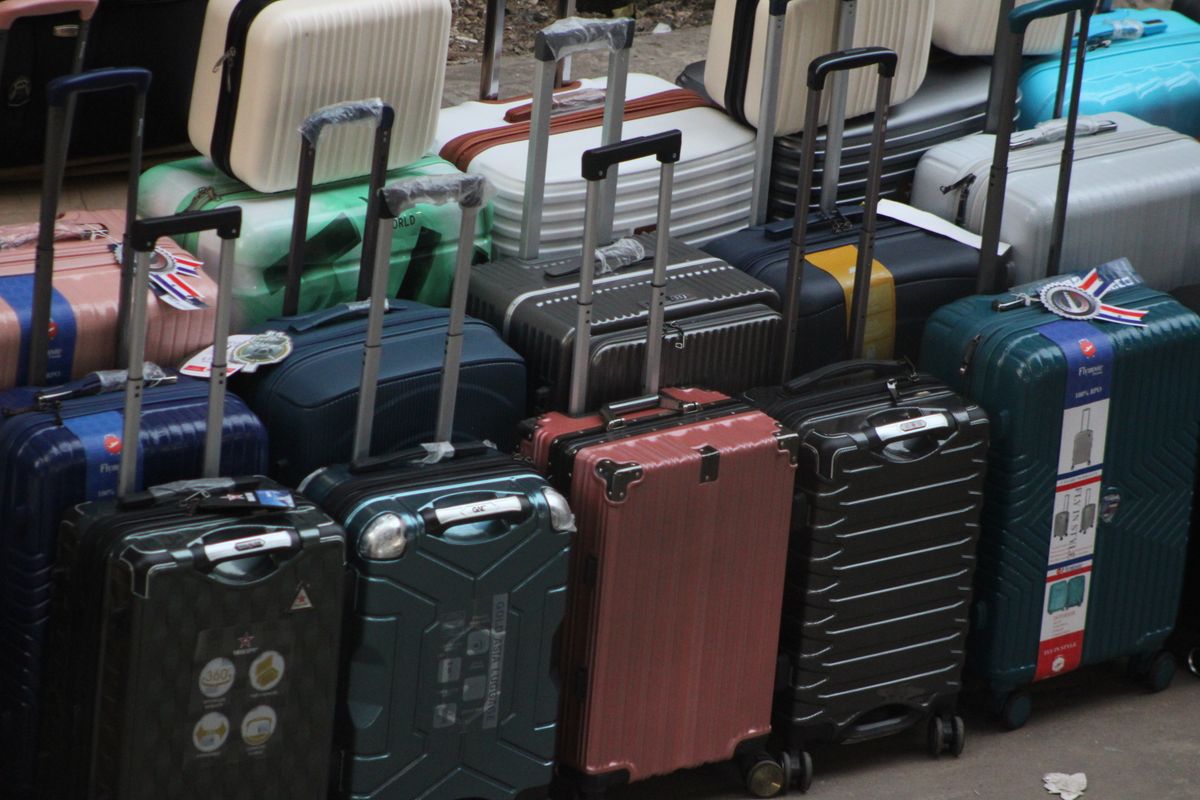
Both constructions survive a normal trip. The useful difference is how each one fails: a hard case tends to fail suddenly and permanently, a soft case gradually and repairably.
Crush protection belongs to the rigid shell
A hard shell spreads stacking load across its surface instead of passing it onto whatever is packed inside. Check a soft case containing anything rigid and the fabric presses that object directly.
Material matters more than the category. Polycarbonate flexes under load and returns; pushed past that point it does not stretch, it cracks. Cheaper hard cases typically use ABS, which is more brittle and gives up sooner, usually at a corner or an edge rather than a flat panel.
Compressibility is the carry-on argument
Fabric has room to give; a rigid box either fits the bin or does not. On a mainline aircraft that rarely decides anything. On a regional jet with shallow bins, it regularly does, which is why carry-on size limits by airline spends time on aircraft rather than on airlines.
Expansion zips work the other way too. A soft case that took more on the return leg can be zipped wider; a clamshell has a fixed volume, and forcing it stresses the frame zip instead.
Empty weight counts against the limit
Empty weight is paid before anything goes in, and it is the one number that is comparable across listings. Kit Authority puts the softside advantage at 1–3 lb against an equivalent hardside; Luggage City quotes 0.5–1.5 kg. The figures disagree in size but agree in direction, which is generally worth more than a single precise number from one source.
Repairability decides what ownership actually costs
This is the dimension most buyers never price. A failed zipper on a soft case can be replaced at most repair shops; Kit Authority cites a range of US$30–60. A structural crack in a hard shell is generally not repairable, so the case is finished.
Wheels are the exception that cuts both ways — they are the most-cited wear item on hard cases and are often replaceable, sometimes by the owner. Everything above the wheel housing behaves according to the shell.
Two failure modes worth naming
Hardside: corner impacts. Point loads concentrate at corners and along edges. A cracked corner is structural and terminal; surface scuffing is cosmetic and can be ignored, or minimised by choosing a textured rather than a glossy finish.
Softside: closures and abrasion. Fabric tears are repairable and therefore survivable. The zip predates the fabric in most failures, and where quality is poor it is the first thing to go; both shell types use coil zips of comparable construction, so it is a shared weakness rather than a softside-only one.
Choosing by where the bag spends its life
Checked regularly, with anything breakable inside: hardside, and polycarbonate rather than ABS. Carry-on only, especially on routes flown by regional aircraft: softside, for compressibility and weight. Comparing two published dimension sheets is the same discipline as comparing garment measurements rather than labels — the method is laid out in how to read a size chart.
The ownership pattern most frequent travellers arrive at is one of each: a soft carry-on and a hard checked case.
FAQ
- Is hardside or softside better for checked bags?
- Hardside, in polycarbonate rather than ABS. A rigid shell spreads stacking load across its surface instead of passing it onto what is packed inside, and it sheds tarmac wet better than fabric. The trade-off is that a structural crack in a hard shell is usually not repairable, so a checked hard case is a replace-rather-than-fix proposition.
- Are polycarbonate shells more crack-resistant than ABS?
- Generally yes. Polycarbonate flexes under load and returns; ABS is cheaper and more brittle, and fails sooner under impact. The weak point on either is the same: corners and edges, where a concentrated load goes, rather than the flat panels.
- How much weight does a soft-sided case actually save?
- Published figures vary by source and size. Kit Authority puts the difference at 1–3 lb against an equivalent hardside, and Luggage City quotes 0.5–1.5 kg. Either way the soft case wins on empty weight, which matters most on airlines that weigh carry-ons.
Written by
Maya Ellis
I started Dressing Time after one too many orders that came back in the wrong size. Everything here is built from published specifications, brand measurement charts and what owners actually report.
More in Bags & Luggage