Sock Heights and Cushioning: What the Names Mean and Where the Cuff Lands
Sock height names are not standardized, so a crew at one brand is a mini-crew at another. Typical cuff heights, denier versus cushioning, and shoe matching.
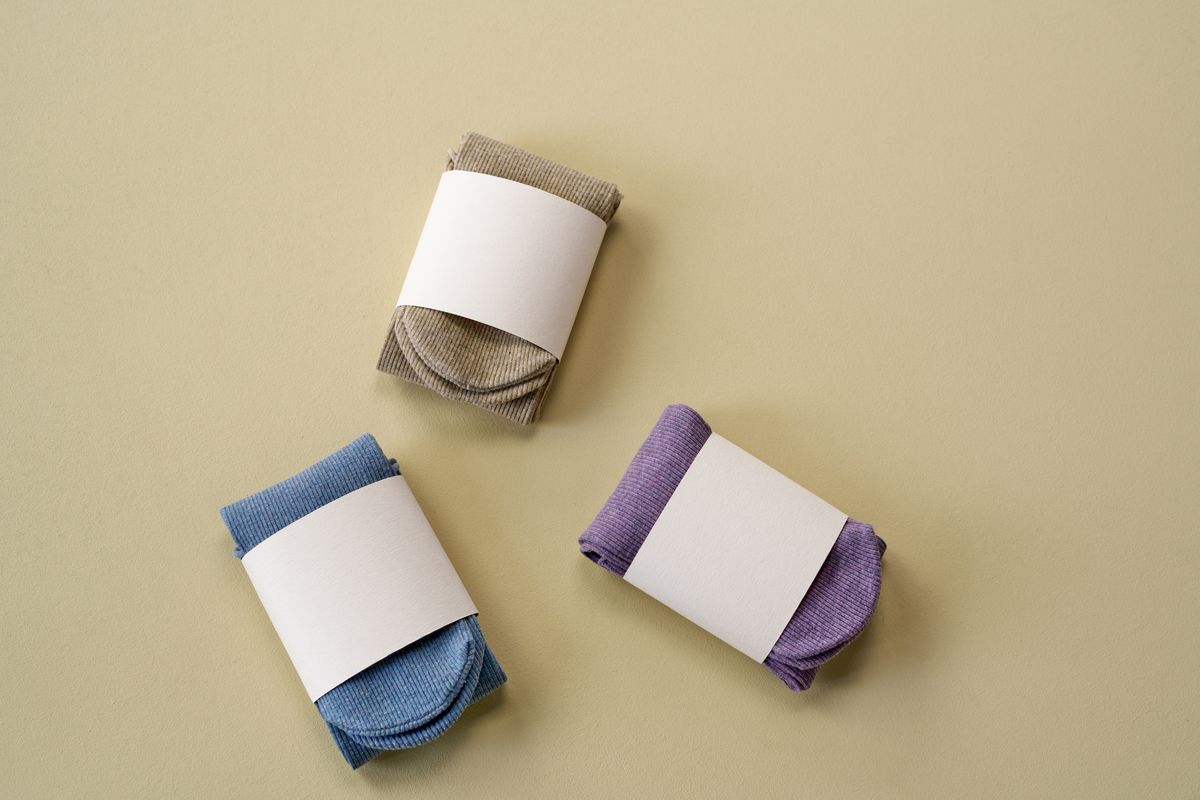
Sock shopping goes wrong in two places: the height name means something different at every brand, and cushioning gets confused with height when they are separate choices. A sock can sit at the same place on the leg and feel completely different underfoot, or be equally padded and cover a completely different amount of leg.
What each height name actually means
Height names describe a silhouette, not a measurement. No standard body defines them, and every brand draws the lines itself. The ranges below are the typical landing points manufacturers work from — useful for orientation, not a guarantee.
| Height name | Typical cuff position | Common use |
|---|---|---|
| No-show / liner / low-cut | Below or just at the ankle bone, hidden in low shoes | Loafers, low sneakers, gym |
| Ankle / quarter | At or just above the ankle bone | Everyday trainers, court sports |
| Mini-crew | Above the ankle, below mid-shin | Trail and lifestyle |
| Crew | Lower to mid calf | Everyday wear, boots, work |
| Mid-calf | Two-thirds up the calf | Dress socks, winter, hiking |
| Over-the-calf / knee-high | Just below to at the knee | Tall boots, ski, uniforms |
| Over-the-knee | Above the knee | Fashion, costume, medical |
The gaps between these names are where the confusion lives. One brand’s crew finishes where another’s mini-crew does, and “micro,” “quarter” and “low-cut” get used almost interchangeably in marketing copy.
Where no-show socks fail
A no-show gives up, by definition, the friction job that made a sock worth wearing: nothing rises above the shoe collar, so the heel counter and topline contact skin directly. The second failure is position. A liner knit without a heel grip slides down under the arch over the course of a day and gathers into a fold underfoot, which is a worse outcome than the visible cuff it was designed to avoid. Silicone strips at the inside heel are the common fix, and they work until they don’t — the strips lose grip as they collect lint, and on a sock washed a few dozen times they can peel away from the knit. Height is also a fit question at the shoe, not just the sock: a quarter-height sock that clears the collar of a low trainer will peek over the topline of the same wearer’s loafers.
Measure the cuff, not the name
Sock height is specified heel-to-cuff, and where the cuff actually lands depends on more than the sock. Foot size matters: the same sock sits lower on the calf of a size 13 foot than a size 8, because the knit stretches over more foot before it reaches the ankle. Leg length matters too.
The practical check is in the product photo and the stated heel-to-cuff measurement, not the style name. And sizing up to get more height backfires — an oversized foot section puts the heel pocket in the wrong place and gathers fabric underfoot.
Cushioning is a separate axis
Cushioning is the padding under the heel and forefoot, and it is built into the knit — usually a terry or plush loop structure knitted into those zones — not into the height. A thin no-show and a heavily padded crew can be knitted at the same cuff height.
Denier, the number that governs thickness in tights and pantyhose, rarely appears on socks. It measures yarn weight — grams per 9,000 metres — and most sock brands skip it entirely, describing cushioning with words instead: lightweight, cushioned, maximum. When a brand does publish a fabric weight in GSM, that is the comparable number across their line.
The trade-off is real. More padding means more abrasion protection and impact absorption underfoot, and more bulk inside the shoe — a heavily cushioned sock in a snug dress shoe will stretch the leather. How a shoe should fit in length and width applies to the sock-shoe combination, not the shoe alone.
Cushioning placement is worth reading for. Terry loops can sit under the heel only, under heel and forefoot, or across the whole footbed, and the choice matters most in a shoe that is already close at the toe: full-foot terry crowds the toes in a snug shoe in a way the padding underfoot never does.
What the package actually tells you
The package carries more usable information than the style name. The fiber content list runs highest to lowest, and it predicts drying time and shape retention: a sock led by cotton absorbs and dries slowly, a sock led by merino manages moisture, and where nylon sits in the list is a rough guide to where the durability was spent. Elastane, even at a percent or two, is what keeps a cuff up through the day. Heel-to-cuff measurement, when printed, is the only height spec that means anything. The cushioning words — lightweight, cushioned, maximum — are the brand’s own scale, comparable within a brand’s line and not between brands.
Matching sock to activity
Running socks are usually thin to mid-weight at ankle or quarter height, with a flat toe seam so the seam ridge does not sit under the toes for miles. Dress socks are fine-gauge, smooth-knit and usually mid-calf or over-the-calf so no bare skin shows when the trouser hem rides up on sitting. Hiking and boot socks go taller and heavier — crew at minimum, mid-calf for real boots — with coverage above the collar contact point.
Dress height interacts with the trouser rather than the shoe. The cuff only does its job when the hem rises on a sit, which means the sock and the trouser break are decided together: a shorter break pulls the hem up further, which pulls the bare-skin risk higher, which pushes the answer toward mid-calf.
Fiber choice interacts with all of it. Cotton is soft but slow-drying and loses shape; merino manages moisture and warmth at low bulk, the same property that makes it a strong base layer against cotton; nylon adds abrasion resistance in the heel and toe where socks wear through first.
Two decisions, made separately
Height comes from the shoe: the cuff clears the collar contact point or it doesn’t, and no-show versus crew gets decided before fabric enters the picture. Cushioning comes from the shoe’s fit and the day’s use: room in the toe box allows terry padding, and a snug dress shoe does not. The step worth taking before the next order is to pull the three socks worn most often, note where each cuff lands relative to each shoe collar and how each one feels underfoot by evening, then buy to that combination rather than to a height name on a product page.
FAQ
- Do crew socks have a standard height?
- No. Crew typically lands somewhere on the lower to mid calf, with published ranges clustering around six to ten inches from heel to cuff, but brands set their own heights and the same name covers different socks. The heel-to-cuff measurement on the package, or the product photo, is the only reliable spec.
- Does a higher denier number mean a warmer sock?
- Denier is a yarn fineness unit — the grams in 9,000 metres of yarn — and it is the standard measure in hosiery, not socks. Most sock brands publish no denier at all. Warmth comes from fiber and construction: merino or wool knits, terry loop padding and heavier fabric all add insulation regardless of any denier figure.
- What sock height works with boots?
- The cuff should sit above the point where the boot collar contacts the leg. Most ankle boots work with a crew; taller boots need mid-calf or over-the-calf. A cuff that disappears inside the boot leaves skin rubbing against the collar, which is the friction problem the sock was supposed to prevent.
Written by
Nora Finch
I started Dressing Time after one too many orders that came back in the wrong size. Everything here is built from published specifications, brand measurement charts and what owners actually report.
More in Accessories