Watch Case Diameter: How to Pick a Size That Suits Your Wrist
Case diameter is the number brands publish, but lug-to-lug length decides whether a watch actually sits flat. Three watches at different sizes, and how to measure before you buy.
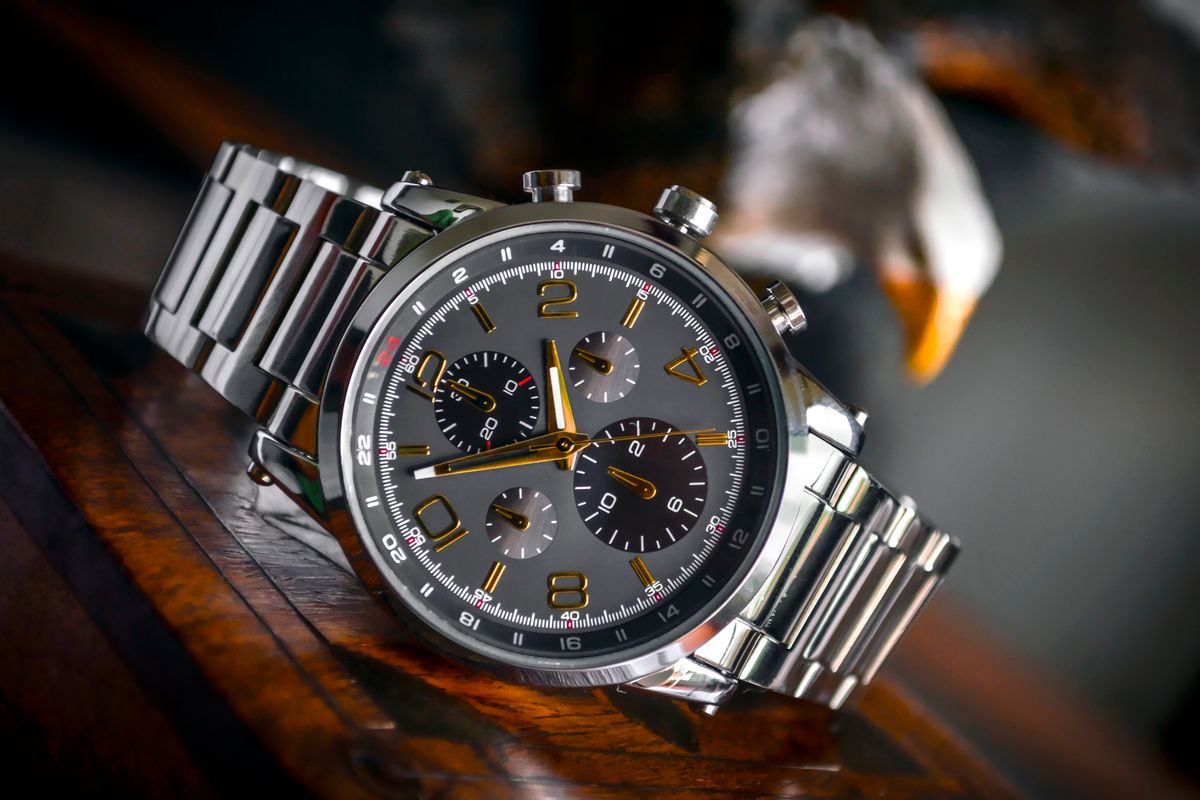
Case diameter is the number every brand publishes and the number most buyers compare. It’s also the number that explains least about how a watch will actually sit on your wrist.
The measurement that matters more
Lug-to-lug — the distance from the tip of the top lug to the tip of the bottom lug — determines whether a watch sits flat or overhangs the sides of your wrist. A 42 mm watch with a short lug-to-lug can sit better on a small wrist than a 38 mm one with long, splayed lugs.
The rough test: measure the flat top of your wrist, side to side. If lug-to-lug exceeds that, the case will overhang.
Brands publish diameter almost universally and lug-to-lug intermittently. When lug-to-lug isn’t listed, it can’t be derived from the diameter — the ratio varies by design. That missing number is worth asking about before buying.
What diameter does tell you
It tells you how large the dial appears, which is an aesthetic question rather than a fit question. Broadly: under 38 mm reads dressy or vintage, 38–42 mm reads conventional, and above 43 mm reads sport or statement. Those bands have loosened as tastes have moved, and a large dial on a small wrist is a deliberate look rather than a mistake.
Thickness is the third dimension and the one that decides cuff clearance. Around 10 mm or under slides under a shirt cuff; above about 13 mm, it tends to catch.
Three watches at three sizes
Picking a size is easier with a reference point, so here are three at different ends of the range — chosen for how clearly each illustrates a size, not as a ranking.
Timex Weekender 38 mm is the small end: a 38 mm case at roughly 9 mm thick, the combination that clears a shirt cuff. The strap swaps on a standard spring bar, which makes it a cheap way to find out whether you prefer a smaller case before spending on one.
Seiko 5 Sports 42.5 mm sits at the top of the conventional range, with a lug-to-lug around 46 mm — the number to check against your own wrist before buying, since it will overhang wrists under about 6.75 in. Automatic movement, and at roughly 13 mm thick it will catch on a tight cuff.
Casio F-91W is the calibration tool. Small, around 8.5 mm thick and light enough to forget, it establishes what the small end feels like for very little money. The resin case reads as utility rather than as a watch you dress up.
How to measure your wrist
Wrap a tape measure around the wrist bone, snug but not tight. Under 6.5 in is small, 6.5–7.5 in is average, over 7.5 in is large. Then measure the flat top of the wrist side to side — that second number is the one to compare against lug-to-lug, and it’s smaller than most people expect.
Trying before buying
Diameter, lug-to-lug and thickness together predict most of it, but not all of it. Case shape, lug angle and bracelet or strap all change how a watch sits. If you’re between sizes, the smaller one is usually the safer error: watches read larger on the wrist than they do in product photography.
The picks
Timex Weekender 38 mm
Best for smaller wristsA 38 mm case at roughly 9 mm thick, which is the combination that clears a shirt cuff without catching. The strap is interchangeable with a standard spring bar, so the same case can be dressed up or down for very little money. The Indiglo backlight is genuinely usable in the dark.
What works
- — 38 mm diameter and slim case suit wrists under 7 in without overhang
- — Straps swap in seconds with a standard spring bar
- — Low enough cost to treat as a reference point rather than a commitment
What doesn't
- — Quartz movement, so no sweeping second hand
- — Mineral crystal scratches more readily than sapphire
- — Water resistance is splash-level, not swimming-level
Seiko 5 Sports 42.5 mm
Best for the conventional rangeSits at the top of the range that still works on an average wrist, with a lug-to-lug around 46 mm — the number to check against your own wrist before buying. Automatic movement with a display case back, and a bracelet that can be swapped for a strap. At roughly 13 mm thick it will catch on a tight cuff.
What works
- — Automatic movement at a price point where that is unusual
- — Hardlex crystal and 100 m water resistance hold up to daily wear
- — Large aftermarket of straps and bracelets that fit
What doesn't
- — 46 mm lug-to-lug will overhang wrists under about 6.75 in
- — 13 mm thickness catches on dress-shirt cuffs
- — Bracelet and clasp are the parts owners most often replace
Casio F-91W
Best for referenceSmall, thin and light enough that it disappears on the wrist, which makes it a useful calibration tool: if you have never worn a watch and want to know whether you prefer a small or large case, this establishes the small end for very little money. The resin case and strap are durable rather than refined.
What works
- — Around 8.5 mm thick, so it clears every cuff
- — Light enough that it is easy to forget it is on
- — Battery runs for years and the module is reliable
What doesn't
- — Resin case and strap read as utility, not as a watch you dress up
- — Small dial and digits are hard to read at a glance
- — Low water resistance despite the sporty appearance
Comparison
| Specification | Timex Weekender 38 mm | Seiko 5 Sports 42.5 mm | Casio F-91W |
|---|---|---|---|
| Case diameter | 38 mm | 42.5 mm | Approximately 35 mm |
| Case thickness | Approximately 9 mm | Approximately 13.4 mm | Approximately 8.5 mm |
| Lug-to-lug | Not published | Approximately 46 mm | Not published |
| Strap / bracelet | Interchangeable nylon or leather | Stainless steel bracelet | Integrated resin strap |
| Cuff clearance | Clears most cuffs | Catches on tighter cuffs | Clears easily |
| Reads as | Understated / dressy | Sport | Utility / minimal |
FAQ
- What case diameter suits a 7-inch wrist?
- Somewhere around 38 to 42 mm for most people, but the number that matters more is lug-to-lug: if the distance between the top and bottom lugs exceeds the width of your wrist, the case will overhang regardless of how the diameter reads.
- Why does a 40 mm watch feel bigger than another 40 mm watch?
- Because diameter excludes the lugs, the bezel height and the crown. Two watches of identical diameter can differ substantially in how much wrist they cover, and taller cases read larger than flatter ones of the same width.
- Is a thicker watch worse?
- Not inherently, but thickness affects whether a watch slides under a shirt cuff. Around 10 mm or under clears most cuffs comfortably; above roughly 13 mm, it tends to catch.
Sources
Written by
Maya Ellis
I started Dressing Time after one too many orders that came back in the wrong size. Everything here is built from published specifications, brand measurement charts and what owners actually report.
More in Accessories