How a Sweater Should Fit Without Looking Borrowed
Shoulder seam, chest ease, hem length and cuff, in the order that matters. Plus how much a knit relaxes with wear and why the size chart oversells the fit.
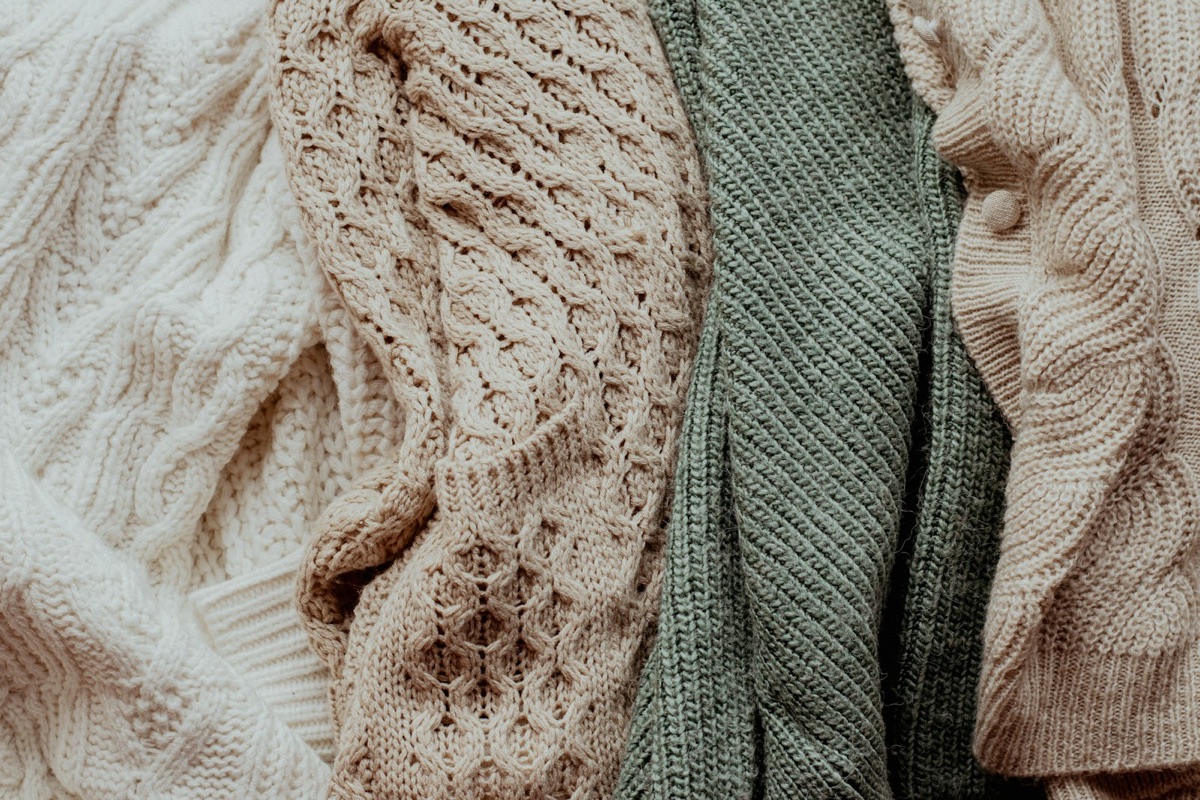
A sweater is the only garment in the closet that gets larger after you buy it. Not by much, and not permanently, but enough that a knit which fits in the mirror at 8 a.m. can look tired by dinner. Wool relaxes under its own weight, and every size decision should account for it.
The rest is ordinary fit logic, applied in a specific order.
Shoulder first, always
On a set-in sweater, the shoulder seam should sit at the bony point where your shoulder turns into your arm. Not past it, not inside it.
A seam that drops down the arm is not automatically wrong. Drop-shoulder knits are cut that way on purpose, and the seam is supposed to sit an inch or two below the natural shoulder. What matters is that the armhole follows. A drop shoulder with a high, tight armhole pulls the whole sweater up when you raise your arms.
Raise both arms and watch the hem. If it climbs more than an inch, the armhole or the chest is too small. That test costs five seconds and catches most bad sweaters before the tag comes off.
Chest ease by gauge
A sweater needs more room than a shirt, and the amount depends on the knit.
| Knit | Ease over chest | Behaviour |
|---|---|---|
| Fine-gauge merino | 2–3 in | Follows the body, shows a shirt collar |
| Mid-weight wool | 3–4 in | Hangs straight, layers over a shirt |
| Chunky cable or lambswool | 4–6 in | Holds its own shape, bulky under a jacket |
Ease is the difference between your chest measurement and the garment’s. Since most charts list the garment measured flat and doubled, you can compare directly: a sweater listing 42 inches across the chest on a 40-inch chest gives two inches of ease.
Below two inches, a knit pulls across the chest and the seams distort. Above six, the shoulders slide and the hem flares. Neither is fixed by washing.
The gauge itself explains the numbers. A fine-gauge knit is knitted tight, has little body of its own, and relies on following the shape underneath; a chunky cable is knitted loose and thick, holds a three-dimensional shape whether or not anything is inside it, and needs the extra allowance simply to hang where it was designed to hang. That is also why a cable knit reads so differently across brands at the same labelled size — the ease table, not the label, is the comparable number.
Body length and the waistband question
For a standard crewneck or V-neck, the hem should land at the hip bone. In practical terms, it covers the waistband of your trousers without reaching mid-fly.
A hem that stops above the waistband shows a strip of shirt or skin every time you move, and it makes the torso look shorter than it is. A hem that reaches the thigh reads as a tunic and throws off the proportion between top and leg.
Ribbed hems change the calculation slightly. A deep rib hugs the hips and holds the sweater down; a shallow rib rides up. If the rib is more than about two inches deep, expect the sweater to sit higher than its measured length suggests.
Sleeves and cuffs
The sleeve should end at the wrist bone, with the ribbed cuff covering the wrist and reaching the base of the thumb. When your arms hang, the cuff should not bunch at the hand.
Cuff condition is the fastest way to judge a knit in a store. Stretch the cuff gently and let go. A good rib snaps back. A tired one stays stretched, which means the sweater has either been tried on too many times or the elastane has given up.
If the sleeves are an inch long, a tailor can shorten a sweater at the cuff, but only if the cuff is a separate piece. Re-knitting a sleeve is not a real alteration. This is one of the few categories where you should refuse to buy long and fix later. How a blazer should fit makes the same point about the shoulder: some parts are structural, and the price of altering them exceeds the garment.
Fabric decides the target size
Wool behaves differently from everything else in the drawer, and the difference starts at the fibre. Fine merino drapes close to the body and relies on its elasticity to spring back between wears. Cotton has almost no recovery, so a cotton knit stretches at the elbows and cuffs and stays there — a cotton sweater should be bought closer to the body precisely because it only gets looser. Acrylic splits the difference badly: it holds its shape on the hanger but distorts faster under abrasion. The trade-offs between animal and plant fibre run deeper than fit, and merino versus cotton covers them layer by layer.
Fibre also decides how a knit survives the off-season. Wool needs to be clean, folded and moth-protected before storage, and storing wool between seasons covers the routine. A sweater that spends the summer in a plastic bin under attic heat arrives in autumn with its fit already altered, and no section of this guide applies to a moth-eaten shoulder.
How much a knit grows
Expect half an inch to a full inch of relaxation in the body and sleeves over a day of wear, more in heavy lambswool, less in a tight merino. Most of it comes back with a wash and flat drying.
Two habits cost sweaters their shape. Hanging a wet knit stretches the shoulders into points that never come out. Washing in hot water and tumbling is worse; why clothes shrink explains the mechanism, and a sweater is the garment where the damage is least reversible.
Pilling is a separate matter of fibre length and abrasion, covered in the guide to knitwear pilling. It is not a sign of poor fit, though a sweater that rubs at the armpits will pill there first.
Layering moves the numbers
A sweater worn over nothing and a sweater worn over a shirt are two different sizing problems. The shirt adds bulk at the chest and, more importantly, at the shoulder seam — a knit that sits exactly at the shoulder point over bare skin will have that seam pushed down the arm by an oxford underneath, with the armhole tightening by the same margin. Sweaters intended as layering pieces need the ease range from the table above, judged over the thickest shirt they will actually carry.
The reverse check matters for anyone who wears knits under jackets. A chunky cable needs four to six inches of ease to hold its own shape, and a jacket sized over a shirt alone will not close over it. Buy the outer layer for the bulkiest thing under it and let the sweater take the smaller size, not the other way around — otherwise every cold morning becomes a choice between warmth and the coat buttoning at all.
The twenty-second store check
Hold the shoulder seam against your shoulder, raise both arms, and watch the hem. Pinch the chest at the ribcage. Stretch the cuff and let it go. Three moves, and they cover the shoulder, the ease and the cuff in one pass — the same order the sections above run in, compressed for a fitting room where the mirror is at the far end of the floor.
Then buy the size that fits on the hanger. The relaxation built into every knit happens after purchase; the size a sweater will supposedly shrink into never arrives.
FAQ
- How much ease should a sweater have across the chest?
- Two to three inches over your body measurement for a fine-gauge merino, three to four for a mid-weight knit, and four to six for a chunky cable. Less than that and the knit pulls at the armpits; more and the shoulders slide out of place.
- Why does my sweater get bigger during the day?
- Knitted wool relaxes under its own weight and the tension of wear, so a sweater can grow half an inch to an inch in the body and sleeves by evening. Washing and drying flat restores most of it. Hanging a wet sweater stretches it permanently.
- Should the hem of a sweater cover your waistband?
- Yes, for crewnecks and most pullovers. The hem should land at the hip bone and cover the trouser waistband without reaching mid-fly. A cropped knit is a deliberate style with a higher hem, not a fit failure, but it needs higher-rise trousers to work.
Written by
Nora Finch
I started Dressing Time after one too many orders that came back in the wrong size. Everything here is built from published specifications, brand measurement charts and what owners actually report.
More in Fit & Buying Guides