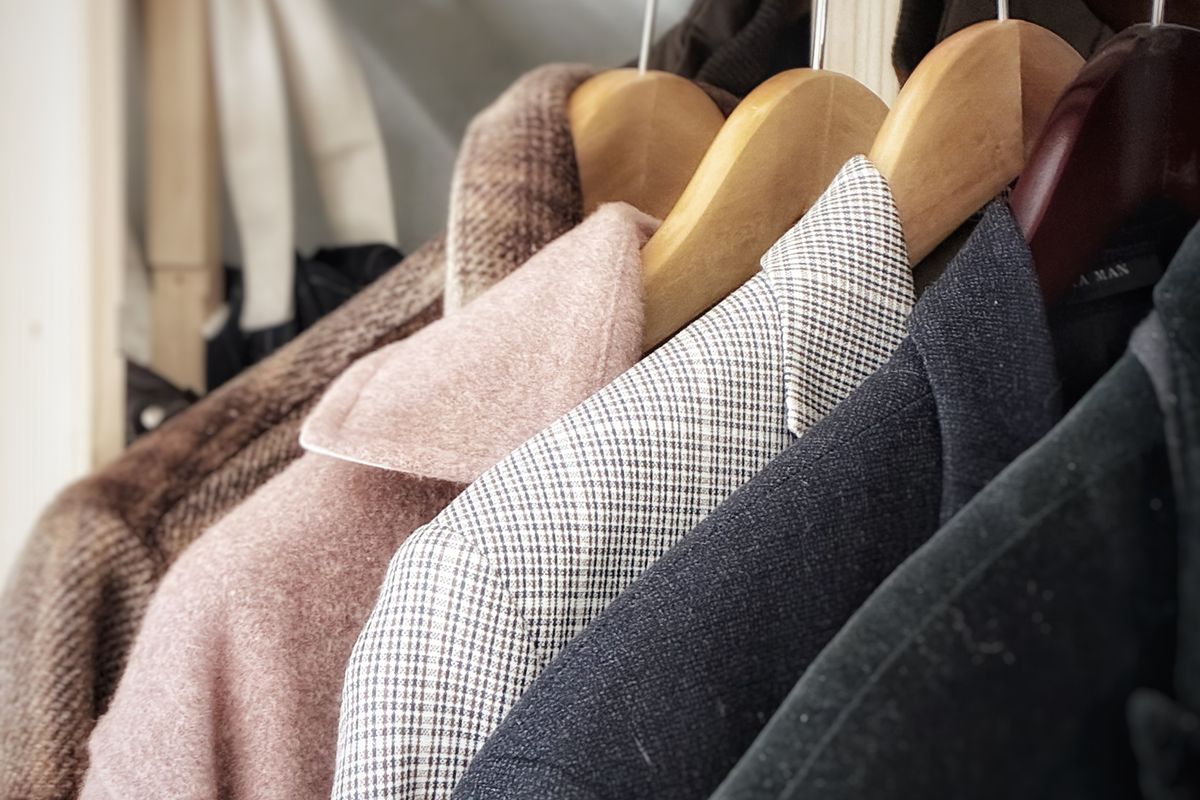
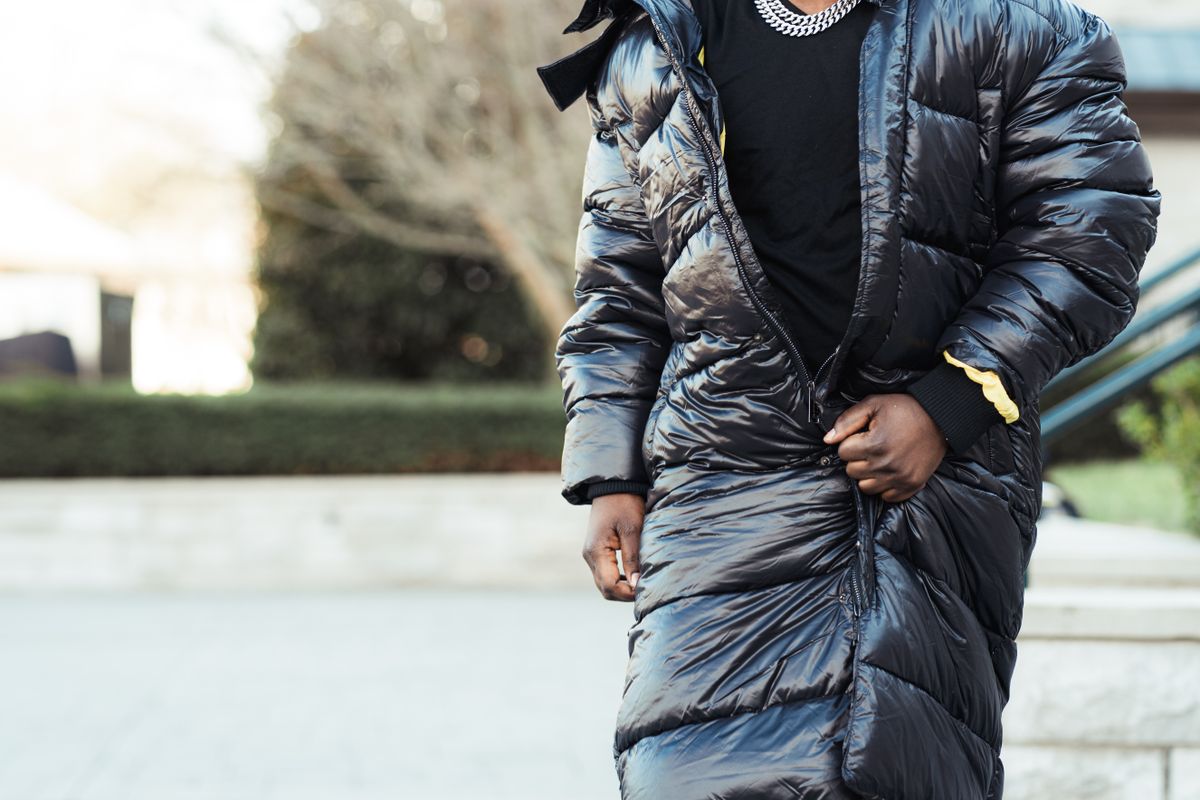
A Three-Jacket System for 40 to 70 Degrees: Bands, Sizing, and the Middle Layer
From 40 to 70 degrees Fahrenheit, one jacket stops working. Three temperature bands, how much to size up as layers stack, and how to pick the middle one.
Forty to seventy degrees Fahrenheit is the range where a single jacket fails in both directions: warm enough for the low end is stifling at the top. Three layers that can be worn separately cover it, and the sizing is what decides whether the system works when all three are on at once.
The three bands
| Band | What goes on | What usually goes wrong |
|---|---|---|
| 60–70°F | Shell over a base layer, or nothing | A fleece worn at 68°F that has to come off in ten minutes |
| 50–60°F | Midlayer plus shell if it is windy or wet | Insulation with no wind protection, which feels ten degrees colder |
| 40–50°F | Insulated layer over a midlayer, shell on top in wind or rain | One heavy jacket instead of two, so there is no way to shed heat |
Wind and wet shift each band by roughly ten degrees. A breezy 55°F with rain behaves like a 45°F day, which is why the shell is the piece that gets worn most across the range — how to layer under a rain shell covers why wind and wet move the number so far.
Sizing up as the layers stack
Each layer has to be looser than the one under it. Insulation works by holding still air; a midlayer squeezed flat under a shell stops insulating, and a shell that fits over a shirt but not over a fleece is the most common sizing mistake in the category.
Check the shell while wearing the thickest combination you expect to use, and judge it on chest room and sleeve length rather than the number on the label — a fleece adds visible bulk through the arms. How to read a size chart sets out which measurement to trust.
At the other end, the base layer stays close to the skin and manages moisture, or the insulation above it is working against a wet shirt.
Choosing the middle layer by output
The question is how hard you will be moving, not how cold it is.
Fleece for anything with a pulse. It breathes, keeps insulating when damp, and dumps heat as soon as the shell opens. Heavier per degree of warmth than down.
Light down or synthetic for sitting, standing, and slow walking. More warmth per gram, and it compresses into a bag — see down versus synthetic insulation for which one suits a damp climate. The cost is that insulation you cannot vent: once you start working, it has to come off.
Three jackets that cover the range
Patagonia Houdini Jacket handles the top band: 105 g (3.7 oz) as published by Patagonia, a 1.2-oz recycled nylon ripstop with a DWR finish, and it stuffs into its own chest pocket. Water-resistant rather than waterproof, and the slim fit leaves little room under it.
Patagonia Better Sweater Fleece Jacket is the middle band at 638 g (22.5 oz), made from 10-oz recycled polyester knit fleece with raglan sleeves that sit comfortably under a shell. It is a sweater-knit face rather than a technical midlayer, so it pills with wear, and it is bulky in a bag.
Uniqlo Ultra Light Down Jacket covers the bottom band with down Uniqlo rates at 750+ fill power by the IDFB method, in a jacket that packs into its own pouch. The water-repellent finish is not permanent, and the care label asks for hand washing.
The check that decides it
Put the whole stack on and reach overhead with the shell done up. If the hem lifts clear of your waistband and the sleeves pull back past the wrist, the shell is the piece to change — not the midlayer.
The picks
Patagonia Houdini Jacket
Best for 60-70 degreesA 105 g windbreaker built from 1.2-oz recycled nylon ripstop with a DWR finish, and the piece that gets worn most often across this temperature range. It stuffs into its own zippered chest pocket with a carabiner loop. The DWR resists light rain rather than real rain, the slim fit leaves little room for anything thicker than a base layer underneath, and there are no hand pockets.
What works
- — 105 g and packs into its own pocket, so it comes along on days it probably will not be needed
- — Wind protection is what turns a 55 degrees F day into a comfortable one
- — Hood adjusts in one pull and does not block peripheral vision
What doesn't
- — Water-resistant, not waterproof — sustained rain needs a different shell
- — Slim fit will not go over a thick midlayer
- — No pit zips and no hand pockets
Patagonia Better Sweater Fleece Jacket
Best midlayer638 g of 10-oz recycled polyester knit fleece with a sweater-knit face, cut hip length with raglan sleeves that sit comfortably under a shell. It breathes well enough to stay on while walking and holds its warmth when damp. It is a sweater rather than a technical midlayer, so it pills with wear, and it is far too bulky to pack for travel.
What works
- — Raglan sleeves and flat seams reduce bulk under a shell
- — Keeps insulating when damp, unlike down
- — Reads as a jacket on its own rather than as a layer
What doesn't
- — At 638 g it is the heaviest of the three and packs poorly
- — Knit face pills with wear, which Patagonia notes on the product page
- — No wind resistance — it needs a shell over it in anything breezy
Uniqlo Ultra Light Down Jacket
Best for 40-50 degreesDown Uniqlo rates at 750+ fill power by the IDFB method, in a jacket that packs into its own pouch and costs a fraction of a technical down piece. It works as an outer layer on still days and as insulation under a shell at the cold end of the range. The water-repellent finish is not permanent, the down loses loft if it gets wet, and the care label asks for hand washing rather than a machine cycle.
What works
- — 750+ fill power at a price where most jackets use much lower grades
- — Packs into its own pouch small enough to live in a bag
- — Low enough cost to buy as a layering experiment
What doesn't
- — Down loses loft when wet, and the shell is only water-repellent
- — Hand wash cold and no tumble drying, per the care label
- — Fill weight is not published, so total warmth cannot be compared directly
Comparison
| Specification | Patagonia Houdini Jacket | Patagonia Better Sweater Fleece Jacket | Uniqlo Ultra Light Down Jacket |
|---|---|---|---|
| Role in the system | Wind and light-rain shell | Breathable midlayer | Packable insulation |
| Comfortable band | 60-70 degrees F over a base layer | 50-60 degrees F, alone or under a shell | 40-50 degrees F, over a midlayer in wind |
| Claimed weight | 105 g (3.7 oz) | 638 g (22.5 oz) | Not published by Uniqlo |
| Material | 1.2-oz recycled nylon ripstop, DWR finish | 10-oz recycled polyester knit fleece | Nylon shell, 90% down / 10% feathers at 750+ fill power |
| Water | Water-resistant, not waterproof | None — needs a shell over it | Water-repellent finish, not permanent |
| Packs | Stuffs into its own chest pocket | Too bulky to pack | Packs into its own pouch |
FAQ
- Do you need three jackets for 40 to 70 degrees?
- Two cover most of it: a wind or rain shell and one insulating layer. A third earns its place when the range has to be covered in one day, because a single insulated jacket warm enough for 40°F is too much at 65°F.
- Should you size up when layering jackets?
- Each layer needs to be cut looser than the one beneath it. Insulation compressed flat under a shell loses the air that does the work, so check the shell over your thickest midlayer rather than over a shirt.
- Is a fleece or a light down jacket the better middle layer?
- Fleece for moving, down for standing still. Fleece breathes and keeps insulating while damp; down gives more warmth per gram but holds heat you cannot dump once you start climbing a hill.
Sources
- Patagonia — Houdini Jacket specifications (weight, material, stuffsack, slim fit)
- Patagonia — Men's Better Sweater Fleece Jacket (US price, 638 g, 10-oz fleece, pilling note)
- UNIQLO — Ultra Light Down Jacket product page (750+ fill power by IDFB method, 90/10 down, pocketable, care)
- Arden Fair — Uniqlo Ultra Light Down Jacket US price listing
- IDFL / IDFB fill power method as described in industry sourcing guidance
Written by
Maya Ellis
I started Dressing Time after one too many orders that came back in the wrong size. Everything here is built from published specifications, brand measurement charts and what owners actually report.
More in Outerwear & Layers