What Vanity Sizing Changed About the Size Label
Size numbers drifted downward over decades, but not evenly. Why the same label differs by brand, by product line, and by market — and what to compare instead.
The number inside the collar is a marketing decision. The measurements are the product. Nearly everything confusing about clothing sizes follows from brands being free to choose the first while the second still has to be right for anyone to keep the garment.
Where the drift came from
The United States has never had a mandatory clothing size standard, and the one attempt at a federal reference is gone. The National Bureau of Standards published body measurements for women’s patterns and apparel in 1958 as Commercial Standard CS 215-58. It was revised in 1970, downgraded to voluntary, and abolished outright in 1983. The voluntary tables that followed — the ASTM D5585 series — are optional, and the 2011 edition has since been withdrawn. Nothing enforces what a medium measures.
With no anchor, labels slid. A body that would once have been sold a large is now sold a medium, and the shopper is flattered into the purchase. That part is real, and it is well documented.
The drift is not uniform
What matters more than the drift itself is how uneven it is. Three gaps account for most surprises:
| Where the same label diverges | What causes it |
|---|---|
| Between two brands | Each brand grades from its own fit model and its own target customer |
| Between two lines in one brand | A relaxed line and a slim line are drafted to different ease and different bodies |
| Between markets | The same garment is often numbered on a different scale for each market it sells into |
Uneven drift is worse than uniform drift. If every brand had moved the same amount, a conversion would fix it. Because each one moved by its own amount at its own pace, there is nothing to convert.
Why “I’m a medium” does not travel
A size is the output of three decisions: the measurements of the fit model the sample was built on, the amount of ease the designer wants, and the customer the brand is aiming at. Those change between brands, between seasons, and between lines inside one brand. The label carries none of that information.
The failure lands hardest exactly where it costs the most — the brand nobody in the household has bought from before.
Working around the number
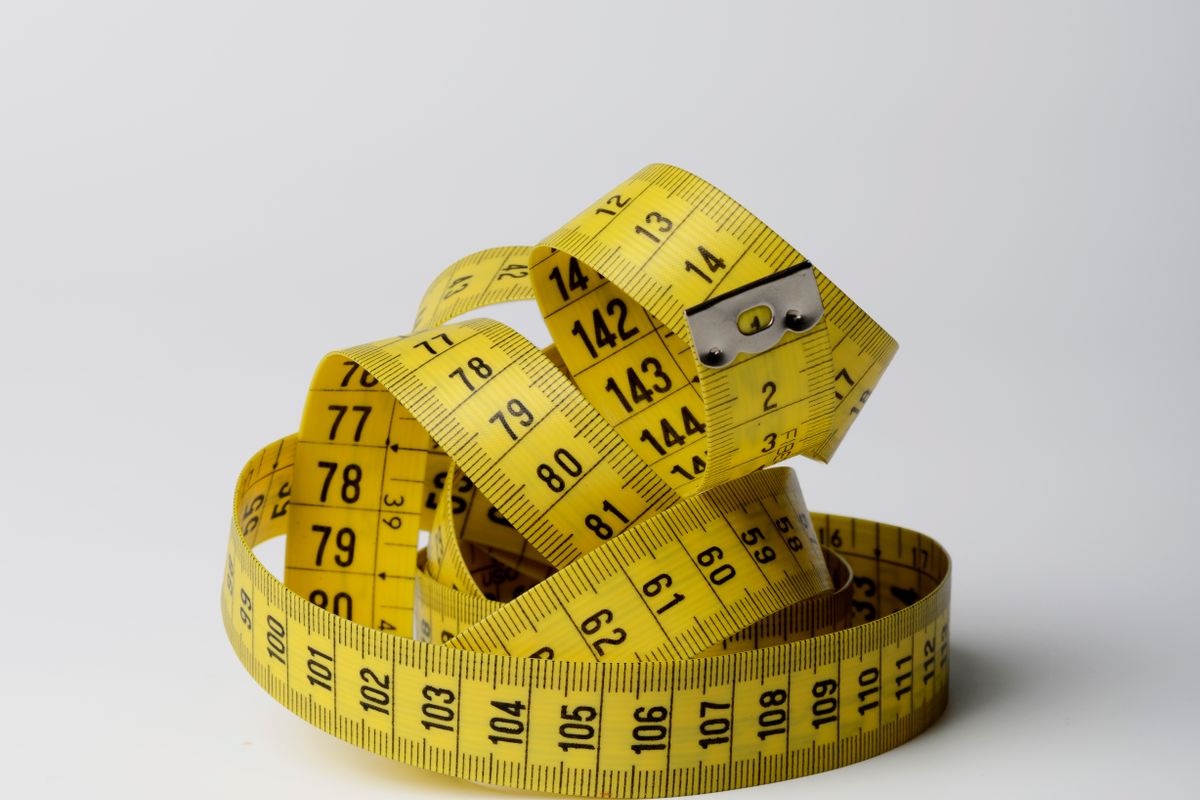
Take the measurements off a garment that already fits, laid flat, and keep them. Compare that set against the brand’s published chart and ignore the letter. Which numbers on a chart actually carry information is set out in how to read a size chart.
Outerwear is the clearest case for why one brand’s medium is not another’s: a shell graded to sit over a fleece measures larger than the same brand’s shirt in the same size, because room for the layer underneath is built into the pattern rather than added at checkout.
The habit that removes the guess: keep the flat measurements of the best-fitting shirt and trousers in the closet in a note on the phone, in inches and centimetres. Every chart then becomes a comparison instead of a bet.
FAQ
- Is there a legal standard for what a size medium has to measure?
- No. The United States has no mandatory clothing size or labeling standard. The federal reference published in 1958 as Commercial Standard CS 215-58 was downgraded to voluntary and abolished in 1983, and the ASTM tables that followed are optional for brands to adopt.
- Does one brand use the same size scale across all its product lines?
- Usually not. Lines are drafted against different fit models and aimed at different customers, so a medium in a relaxed line and a medium in a slim line from the same brand can measure differently. Treat each line as its own scale until the chart says otherwise.
- What should replace my usual size when shopping a new brand?
- The flat measurements of a garment you already own and like. Compare that set against the brand's published chart and ignore the letter entirely, because the letter carries no information that transfers between brands.
Written by
Maya Ellis
I started Dressing Time after one too many orders that came back in the wrong size. Everything here is built from published specifications, brand measurement charts and what owners actually report.
More in Fit & Buying Guides