What Ease Means in a Garment, and How Much You Need
Ease is the difference between the garment and the body. How wearing ease and design ease differ, why buying to your own chest number is always tight, and how to read it off a chart.
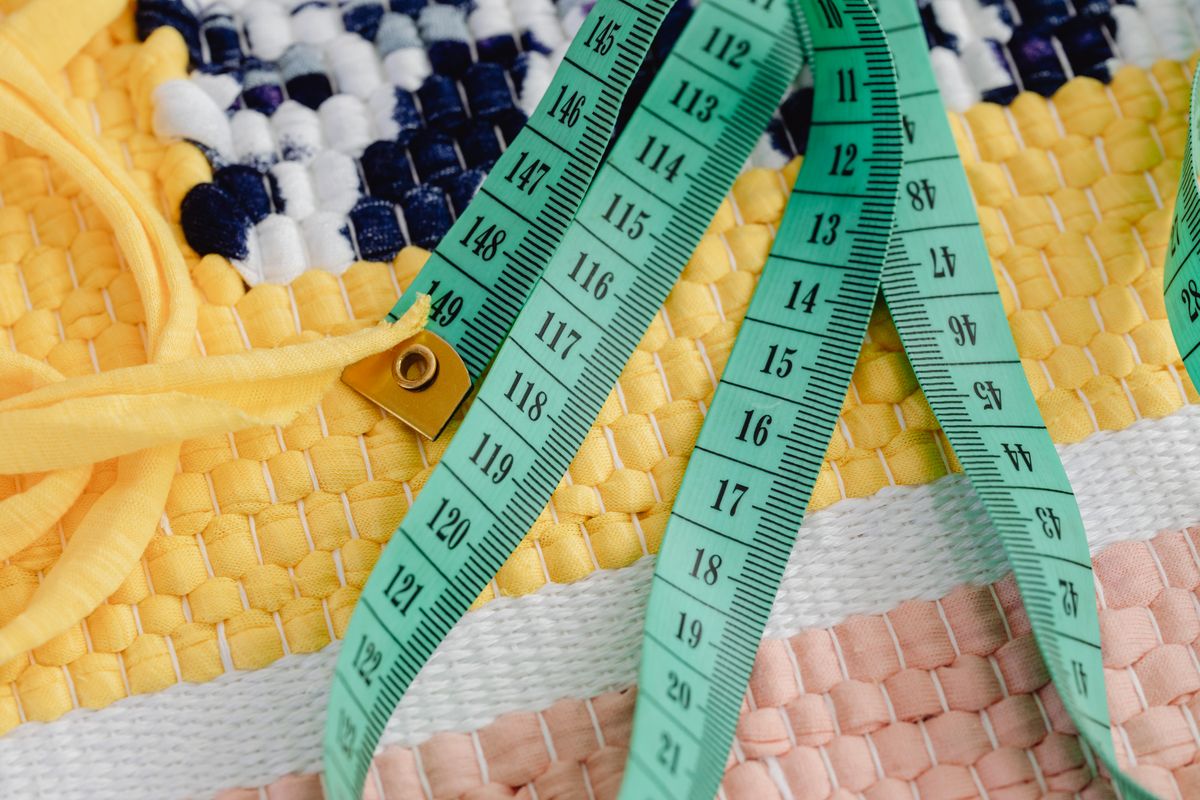
Ease is the difference between a garment’s measurement and the body inside it. That single subtraction explains more about why a size does or does not work than anything else on a chart, and almost no brand publishes the number.
Two different things share the name
Wearing ease is the room needed for ordinary movement — sitting, reaching, breathing. Design ease is everything added on top of that to produce a silhouette. Standard patternmaking references define ease as the difference between the finished garment measurement and the body measurement, and keep the two apart: wearing ease allows movement, design ease is the volume added deliberately to get a shape.
The distinction matters because only one of them is negotiable. A garment can be made with almost no design ease. One made with no wearing ease cannot be worn.
Sewing references publish ease by category rather than as one number. A commonly cited table for wovens puts a blouse at roughly two and a half to four inches at the bust, a jacket at about three, a coat at three to four, and trousers at about an inch at the waist with half an inch to two at the hip. Those are drafting conventions, not retail standards — no brand publishes its own ease figure, which is why the number has to be worked out from the chart.
Why buying to your own chest number is always tight
If the chart’s chest number equals yours, ease is zero. Zero ease means the fabric is at its limit the moment you move: the placket pulls, the shoulder blades strain, and there is no allowance for the first wash. Worse, the same is true one size down in a brand that grades generously and two sizes down in one that does not.
Where ease has to go, by category
| Category | Where the ease has to be | What gives it away |
|---|---|---|
| Woven shirt | Chest and across the shoulder blades | Placket pulling when seated |
| Knit top | Can be zero or negative — the fabric does the work | Stretch percentage in the fiber list |
| Jacket or coat | Chest and upper sleeve, since it goes over a layer | Whether the brand says it fits over knitwear |
| Trousers | Hip and thigh more than the waist | Horizontal creasing across the seat when standing |
The pattern across all four: ease is needed where the body changes shape while being worn, not around the widest static measurement.
Reading the ease back out of a chart
If the chart lists garment measurements, subtract your body number and the remainder is the ease you would be buying. That is the only case where the arithmetic works.
If the chart lists the body measurements each size is meant to fit, the ease is already inside the number and cannot be extracted — the brand has decided it and hidden it. Comparing two adjacent sizes tells you the grade between sizes, which is a different quantity and a much less useful one.
Which of the two a chart is showing, and how to tell from the numbers themselves, is set out in how to read a size chart.
One action settles it: measure the best-fitting garment in the closet flat, subtract the body measurement it covers, and write the result down. That number is the ease that has been working all along, and it survives a change of brand in a way the letter never does.
FAQ
- How much ease should a shirt have across the chest?
- Enough that the button placket does not pull when you sit and reach forward. Sewing references typically put a woven blouse at roughly two and a half to four inches across the bust, but those are drafting conventions rather than retail standards, and brands do not publish the figure for their own garments.
- Can a garment have negative ease?
- Yes, in stretch fabrics. A knit can measure smaller than the body and still be comfortable, because the fabric supplies the movement instead of the pattern. Applying that logic to a rigid woven produces a garment that cannot be worn.
- Why does a size that matches my chest measurement still feel tight?
- Because a chart number equal to your chest means zero ease — the fabric is already at its limit before you move. Add the shrinkage of a first wash and the garment has nowhere to go.
Written by
Maya Ellis
I started Dressing Time after one too many orders that came back in the wrong size. Everything here is built from published specifications, brand measurement charts and what owners actually report.
More in Fit & Buying Guides