Denim Weight in Ounces: What the Number Actually Changes
Denim is sold by ounces per square yard, not by how heavy the jean feels. Here is what each weight band does to drape, break-in and heat — and why the heaviest option is rarely the best one.
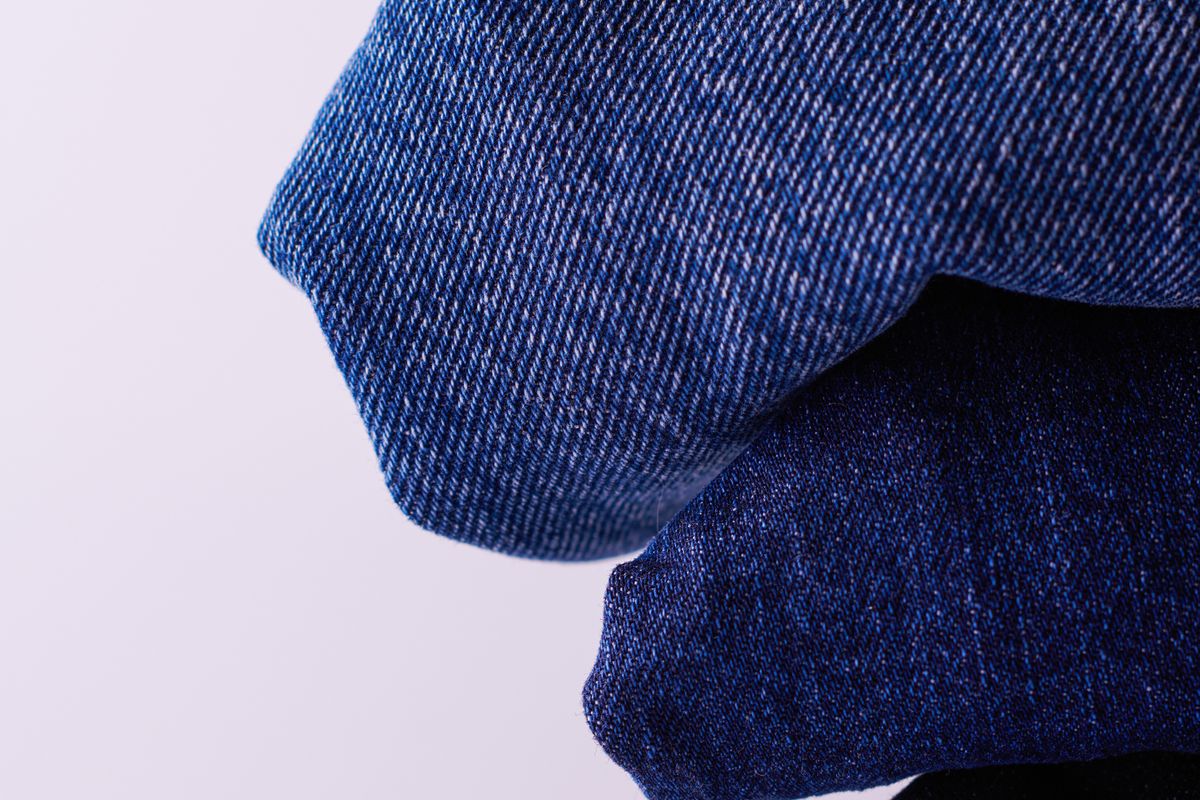
Denim is one of the few fabrics sold with a number most buyers can’t decode. The ounces on a product page are not the weight of the garment. They are the weight of one square yard of the cloth before anything was cut from it.
What the number measures
Denim is graded in ounces per square yard (oz/yd²). Most other apparel fabric is graded in grams per square metre (gsm), which is why denim numbers look unfamiliar — one oz/yd² works out at roughly 34 gsm by unit conversion. The unit difference matters mainly when comparing across categories, the same way reading a size chart only works once you know whether the column describes the garment or the body.
A heavier number means thicker yarn, a denser weave, or both. It does not describe stretch, dye or finish, and it says nothing about how the jean is cut.
The bands, and where they are honestly useful
There is no standard that defines where “midweight” ends and “heavyweight” begins. Mills and retailers each set their own labels. Roughly, though, the trade tends to group it this way:
| Weight (oz/yd²) | How it behaves | What it suits |
|---|---|---|
| 8–10 | Drapes, breathes, creases softly | Summer trousers, shirts, relaxed cuts |
| 11–13 | Structured enough to hold a line | Everyday jeans, most wardrobes |
| 14–16 | Stiff off the shelf, sharp fades | Raw denim, workwear-inspired cuts |
| 17–21 | Very stiff, slow to soften | Cold weather, specialist raw denim |
| 21+ | Barely drapes at all | Enthusiast selvedge from Japanese mills |
Brands publishing real numbers make the bands less abstract. Everlane’s own product copy lists its Super-Soft Relaxed Jean at 10 oz, its Selvedge Straight Fit Jean at 12.5 oz, and several rigid styles at 13 oz. That is a useful calibration: three jeans marketed very differently, sitting one band apart.
Specialist Japanese mills are credited with pushing production denim well past 20 oz, and a handful of releases above 30 oz exist. They are novelties within the category, not the benchmark for it.
Why heavier is not automatically better
Weight buys a specific set of properties and costs others.
What improves. Abrasion resistance, because there is more yarn to wear through. Crease retention, which is why heavyweight denim makes crisp fades at the knee and hem. Warmth, which is genuinely useful in winter and genuinely miserable in August.
What gets worse. Breathability drops as density rises. Break-in stretches from weeks to months at the top end, during which the fabric is stiff across the seat and crotch — precisely the area that fails first on any pair of jeans. Fabric this dense also holds less give, so fit has to be right at purchase rather than expected to ease in.
Where selvedge fits
Selvedge is a loom term. Narrow shuttle looms weave denim with a self-finished edge along the selvage of the roll, which is why the outseam of a selvedge jean can be finished with the fabric’s own edge instead of an overlock stitch. Shuttle looms produce narrow cloth slowly, so selvedge costs more — but the fabric coming off them can be any weight. It is routinely woven in the 11–14 oz range. Treating “selvedge” as shorthand for heavy is a marketing habit, not a specification.
Using the number
Decide by climate and patience first, durability second. One midweight pair for most days and one heavier pair for cold months covers more ground than committing to a single flagship weight.
Check whether the brand publishes the figure at all. Weight noticeably affects how a jean behaves, and a listing that omits it is withholding one of the three or four numbers that actually predict what you’re buying.
FAQ
- What is a good denim weight for everyday jeans?
- Most jeans sold for daily wear sit somewhere between 11 and 14 oz per square yard. That range is heavy enough to hold a crease and survive regular washing, and light enough to be comfortable sitting down for a full day. Below about 10 oz the cloth starts behaving like a trouser fabric rather than denim; above about 16 oz it needs a deliberate break-in period before it stops feeling like board.
- Does heavier denim last longer?
- More mass means more yarn to abrade, so heavyweight denim generally resists wear-through longer in high-friction spots. It is not a straight upgrade: heavier denim is hotter, slower to soften, and stiffer across the seat and crotch, where movement does most of the damage. Fabric construction and how the garment is cut decide durability alongside weight.
- Does selvedge mean heavier denim?
- No. Selvedge describes how the fabric was woven — on a narrow shuttle loom that leaves a finished self-edge — not how much it weighs. Selvedge denim is commonly produced in the midweight band, including weights around 12.5 oz. Heavyweight denim and selvedge denim overlap, but one does not imply the other.
Written by
Maya Ellis
I started Dressing Time after one too many orders that came back in the wrong size. Everything here is built from published specifications, brand measurement charts and what owners actually report.
More in Everyday Wardrobe